
Planning a trip sounds easy until you actually start doing it.
You choose a destination, book a flight, find a hotel, figure out transportation, search for restaurants, compare activities, check distances, and try to understand which neighborhoods are worth visiting. Before long, you have 15 browser tabs open and several completely different opinions about what you should do.
That is where a travel resource like TravelTweaks.com can become useful.
TravelTweaks is designed around practical travel information rather than simply showing readers beautiful destinations. The site covers destinations, airlines, hotels and resorts, food, adventure travel, travel trends, photography, useful distance information, interesting facts, and travel offers.
The result is a broad travel platform that can be useful at several stages of a trip.
Someone who has not decided where to go can browse destinations and travel ideas. A traveler who already has flights booked can research hotels, restaurants, activities, and local distances. Someone trying to reduce the cost of a vacation can look for deals and money-saving advice.
What makes the site interesting is the variety of questions it attempts to answer. Travel is rarely one decision. It is dozens of small decisions, and making those decisions well can have a big impact on your budget and overall experience.
Here is a closer look at TravelTweaks.com, its main content categories, useful features, and how travelers can use the site when researching their next trip.
What Is TravelTweaks?
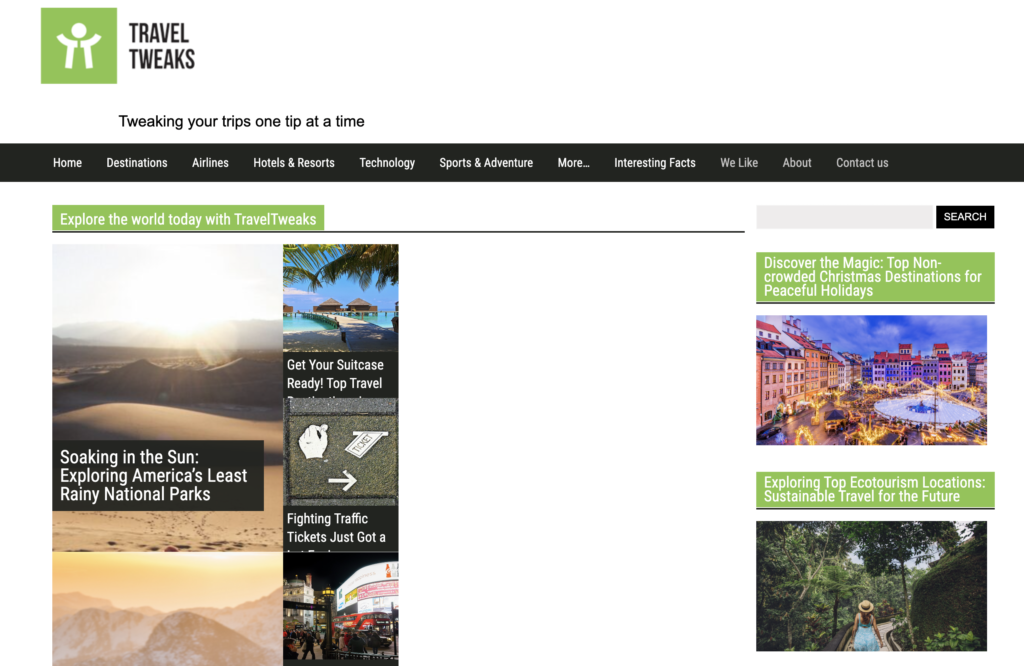
TravelTweaks is a travel-focused website built around destination information, planning advice, travel inspiration, and practical tips.
Rather than concentrating exclusively on one part of travel, such as cheap flights or hotel reviews, the platform covers several parts of the journey.
That makes sense because travelers rarely research things independently.
You might begin by searching for the best time to visit Nashville, for example, and then want to know where to stay. After choosing a hotel, you might start researching restaurants, nightlife, nearby attractions, transportation, and day trips.
TravelTweaks attempts to keep these different research needs within a broader travel ecosystem.
The site’s content ranges from straightforward informational articles to destination inspiration and travel-related recommendations. Some topics are aimed at travelers actively planning a trip, while others are better suited to people simply looking for ideas.
This mix makes TravelTweaks useful both before and after you have chosen a destination.
The key is to treat it as a research resource rather than expecting every article to serve the same purpose. A hotel article may help with accommodation decisions, while a distance article might answer a very specific logistical question.
Together, these different categories create a travel library covering many of the questions that appear between “Where should I go?” and “What should I do when I get there?”
Key Content Categories on TravelTweaks
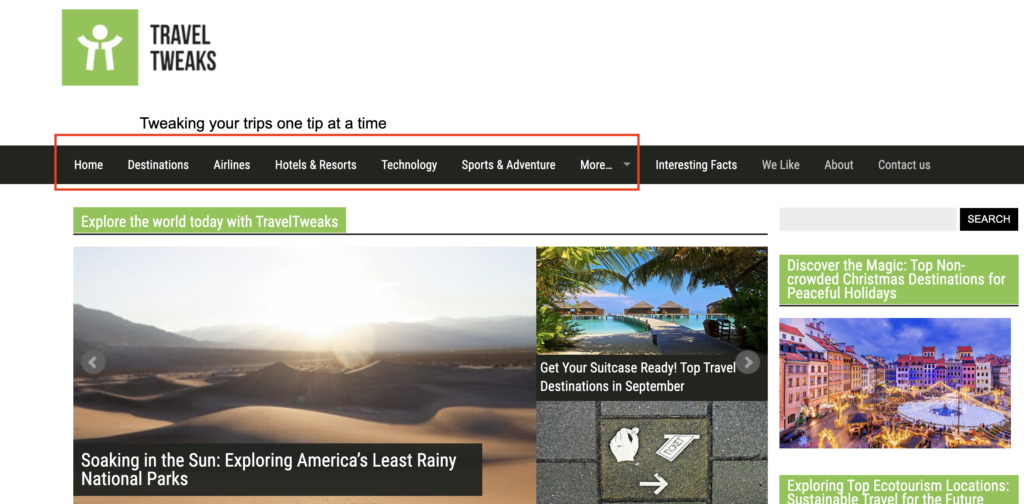
One of the main strengths of TravelTweaks is the range of topics available.
Instead of focusing exclusively on destination guides, the website organizes travel information across several categories. Understanding these categories makes it easier to find the information you actually need.
Destinations
The Destinations section is one of the natural starting points for trip research.
Destination content helps readers understand places before they arrive. Depending on the topic, that might include attractions, neighborhoods, seasonal activities, local culture, transportation, safety considerations, or general travel planning advice.
This type of content is particularly useful when you know where you want to travel but have not yet created an itinerary.
Imagine that you are planning your first visit to Nashville.
Knowing that Nashville is famous for country music is easy. Building a useful four-day itinerary requires much more information. You need to understand which neighborhoods to visit, what activities are available outside Broadway, where you might eat, how nightlife works, and whether any nearby destinations are worth adding to your trip.
Destination guides help turn a city name into an actual travel plan.
They can also introduce readers to places they might otherwise overlook. Many travelers repeatedly encounter the same famous cities in search results and social media feeds. Broader destination coverage can encourage people to explore beyond those obvious choices.
Airlines
Choosing an airline involves more than comparing the cheapest fare on a booking screen.
Baggage allowances, seat comfort, cabin classes, route networks, meals, check-in procedures, loyalty programs, cancellation policies, and connection quality can all affect the journey.
This becomes especially important on long-haul flights.
Saving $40 on a ticket may seem attractive, but the calculation changes if the cheaper fare excludes checked baggage, seat selection, or meals that are included with another airline.
Airline-focused content can help travelers look beyond the headline fare.
It can also be useful for understanding unfamiliar carriers. Travelers are often comfortable booking an airline they have used before but hesitate when a less familiar airline appears in search results.
Researching the carrier beforehand can help set realistic expectations.
Hotels & Resorts
Accommodation is often one of the biggest expenses of a trip, which makes hotel research particularly important.
The Hotels & Resorts category can help readers think about accommodation beyond room price.
Location matters. So do facilities, room types, transportation access, resort fees, cancellation conditions, breakfast, parking, and the type of traveler the property is designed for.
A luxury resort may be excellent for a honeymoon but unnecessary for someone spending almost every waking hour sightseeing.
Likewise, a cheaper hotel far outside the city center can become expensive once you calculate daily transportation costs and the time spent commuting.
Good hotel research helps travelers consider the full experience rather than simply choosing whichever room appears cheapest.
TravelTweaks’ hotel-related content fits naturally alongside its destination coverage because accommodation decisions make more sense when you understand the destination itself.
Sports & Adventure
Not everyone wants a vacation built around museums, restaurants, and city tours.
Some travelers plan entire trips around outdoor experiences.
The Sports & Adventure category addresses this side of travel.
Adventure-focused content can cover activities such as hiking, skiing, water sports, cycling, camping, wildlife experiences, and other active trips.
Planning these journeys requires different information from a standard city break.
Weather matters more. Equipment may be necessary. Fitness requirements become relevant. Transportation to remote locations can be complicated, and seasonal conditions may determine whether an activity is available at all.
Adventure travelers therefore benefit from practical preparation as much as inspiration.
This category can also appeal to ordinary travelers who simply want to add one active experience to a larger vacation.
You do not need to be a serious mountaineer to enjoy a scenic hike or spend an afternoon kayaking.
Travel Trends
Travel changes constantly.
New destinations become popular. Airline routes appear and disappear. Travelers change how they book accommodation. Technology affects trip planning, and economic conditions influence where people travel and how much they spend.
The Travel Trends section looks at this changing side of the industry.
Trend content can be useful because travel advice has a shorter shelf life than many people realize.
A neighborhood described as “undiscovered” five years ago may now be packed with visitors. A once-affordable destination may have become significantly more expensive. New transportation connections can suddenly make previously inconvenient places much easier to visit.
Following travel trends gives readers a broader view of how travel habits and destinations are evolving.
It can also provide inspiration.
Sometimes the most interesting trip ideas come from noticing what is changing rather than repeatedly looking at established “top 10 destinations” lists.
Travel Photos
Photography and travel have always been closely connected.
Images can communicate something about a destination that practical information cannot.
You can read about a mountain village, tropical beach, historic district, or national park, but seeing the landscape often determines whether you actually want to visit.
The Travel Photos category adds this visual element.
For travelers researching destinations, photography can help establish expectations about architecture, landscapes, streets, attractions, and overall atmosphere.
It can also inspire itinerary decisions.
A photograph of a viewpoint, neighborhood, market, or lesser-known attraction might lead someone to add a place they had not previously considered.
Travel photography is not simply decoration. Used properly, it becomes part of the research process.
Bars & Restaurants
Food can be one of the most memorable parts of travel.
Yet finding good places to eat is surprisingly difficult in popular destinations.
The most visible restaurants are not always the best ones. Tourist-heavy neighborhoods often contain establishments designed primarily around convenience and location rather than quality or value.
The Bars & Restaurants section helps readers explore the food and nightlife side of destinations.
This can include restaurant ideas, bars, cafés, local dishes, nightlife areas, and destination-specific dining advice.
The category becomes particularly useful when paired with destination research.
Instead of searching for food only when you become hungry, you can identify a few promising areas and restaurants before the trip.
You do not need to schedule every meal.
Having three or four reliable options saved can simply prevent the familiar situation where everyone is tired, hungry, and scrolling through restaurant reviews on the sidewalk.
What Makes TravelTweaks Stand Out?
There are thousands of travel websites online.
Some focus on inspiration. Others specialize in booking. Many concentrate heavily on one area, such as hotels, points and miles, backpacking, or luxury travel.
TravelTweaks takes a broader approach.
Its usefulness comes from combining practical information, destination content, travel questions, and trip inspiration in one place.
A Clean, User-First Experience
Travel research can become overwhelming quickly, so readability matters.
A travel website should make information easier to understand rather than adding another layer of complexity.
TravelTweaks uses topic-focused content that allows readers to move toward the information relevant to their trip.
This is particularly useful for people who do not want to spend hours researching every detail.
Someone searching for a specific distance, airline question, destination activity, or hotel topic usually wants an answer without having to work through unrelated information.
Clear categories also make exploration easier.
You can start with a destination and gradually move into more specific research as your plans develop.
Regularly Updated Content
Travel information needs to stay current.
Airline policies change. Hotel pricing changes. Attractions update operating hours. New restaurants open. Others close. Travel trends shift, and seasonal events may look completely different from one year to the next.
That makes updated content especially valuable in this industry.
Travelers should still verify critical information such as visa requirements, government regulations, transportation schedules, entry conditions, and official opening hours before making decisions.
But updated editorial content provides a much better starting point than old travel advice that has not been reviewed for years.
Fresh information matters even more for articles dealing with pricing, events, airlines, and travel trends.
Practical Money-Saving Advice
Travel can become expensive surprisingly quickly.
A flight and hotel might fit comfortably within your initial budget, but then come baggage charges, airport transfers, restaurant bills, attraction tickets, local transportation, resort fees, and other costs.
Practical money-saving content can help travelers look beyond the obvious expenses.
Sometimes saving money means finding a cheaper flight.
Other times, it means choosing a better hotel location so you spend less on transportation. It might involve traveling outside peak season, avoiding hidden hotel charges, using public transport, or booking certain activities ahead of time.
The most useful budget advice is not about making every trip as cheap as possible.
It is about spending intentionally.
Saving $100 on an inconvenient hotel that adds several hours of commuting may not be a good deal. Spending slightly more for a better location can sometimes improve the trip while reducing other costs.
Navigating the TravelTweaks Offers Section
Travel deals are attractive, but they should always be evaluated in context.
The Offers section gives travelers another place to look for potential savings and travel opportunities.
The best way to approach any travel offer is to begin with your actual needs.
Do not book something simply because the discount percentage looks impressive.
If you are researching accommodation, compare the final price after taxes and mandatory fees. Check the room conditions, cancellation policy, location, and what is actually included.
For flights, compare baggage rules and fare restrictions.
For activities, check dates, duration, meeting locations, and cancellation conditions.
A deal only saves money if you would reasonably have purchased the product or service anyway.
Travelers can therefore use the Offers section as part of the comparison process rather than treating it as the final step.
Research first. Compare the details. Then decide whether the offer genuinely improves the value of the trip.
Unique Features Worth Knowing
TravelTweaks also includes content areas that go beyond standard destination and hotel articles.
These smaller sections can be surprisingly useful because they address specific questions travelers frequently ask.
The “How Far” and “What Is the Distance?” Sections
Distance questions appear constantly during trip planning.
How far is the airport from downtown?
How far is one city from another?
Can you visit a particular attraction as a day trip?
Is it better to drive, take a train, or fly?
Knowing the distance alone does not always answer these questions, but it provides an important starting point.
Two destinations might only be 60 miles apart yet require several hours of travel because of road conditions, ferry schedules, mountain routes, or limited transportation.
Conversely, two cities separated by a much greater distance may be connected by a fast train.
The “How Far” and “What Is the Distance?” sections are useful for travelers trying to understand these geographic relationships.
This information becomes particularly valuable for road trips and multi-city itineraries.
Instead of simply adding destinations because they look close on a map, travelers can think more realistically about travel time and route planning.
Interesting Facts
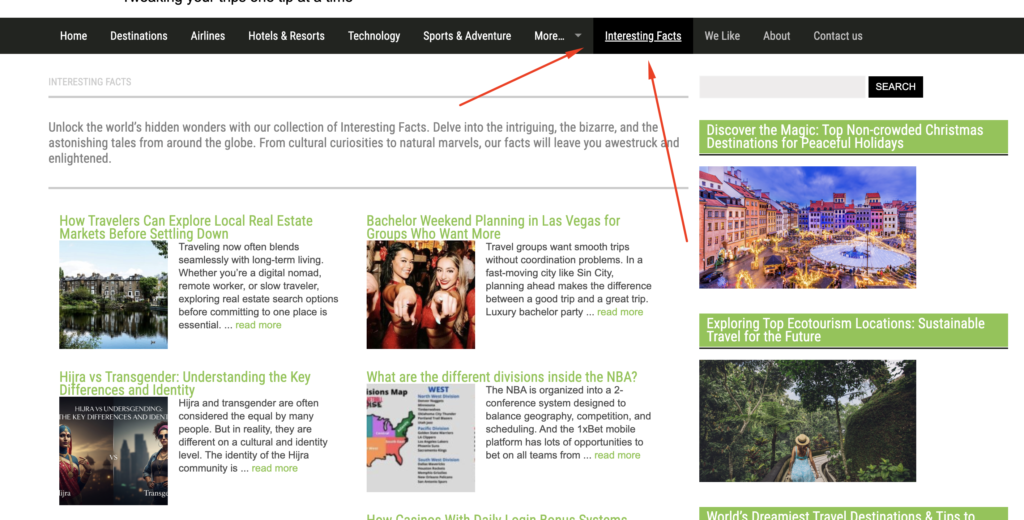
Not every piece of travel content needs to solve a logistical problem.
Sometimes understanding a place makes visiting it more enjoyable.
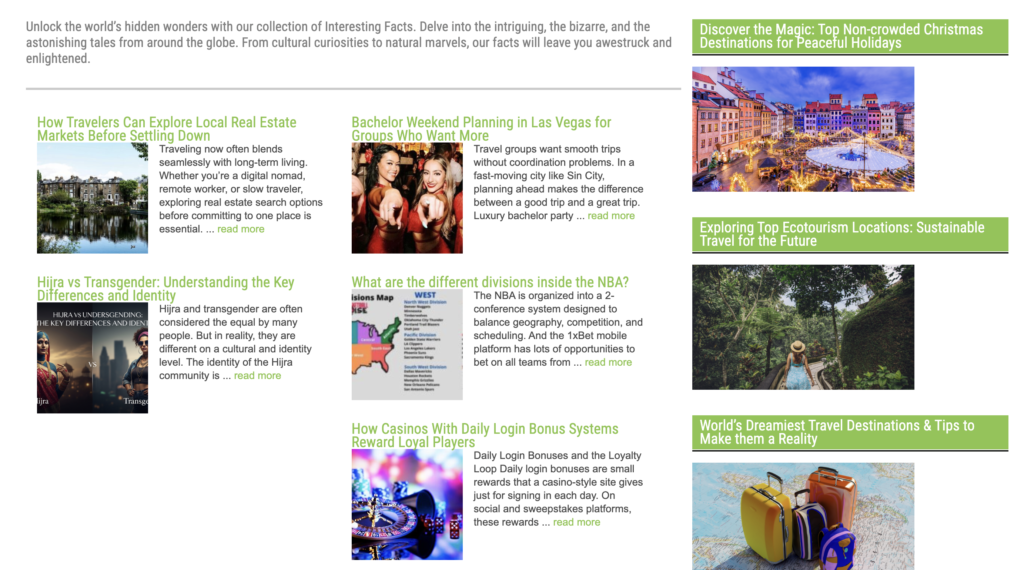
The Interesting Facts section provides another way to explore destinations, landmarks, cultures, geography, and travel-related subjects.
Facts can give context to things you eventually see in person.
A building becomes more interesting when you understand why it was built. A neighborhood becomes easier to appreciate when you know how it developed. A local tradition makes more sense when you understand its history.
This kind of content works particularly well during the inspiration stage of travel planning.
It can also be enjoyable reading when you are not actively planning a trip at all.
“We Like” — A Curated Travel Blog List
No single travel website can cover every destination or every style of travel.
That is why curated travel resources can be useful.
The “We Like” section points readers toward other travel blogs and sources worth exploring.
This recognizes something important about travel research: different travelers need different perspectives.
A luxury traveler may want completely different advice from a backpacker. A parent traveling with children has different priorities from a solo traveler. Someone planning a hiking holiday needs different information from someone organizing a food-focused weekend.
Curated external inspiration can help readers discover voices and travel styles that match their own interests.
How to Get the Most Out of TravelTweaks?

The best way to use TravelTweaks is to match the site to the stage of your trip.
If you have not chosen a destination, begin with destination articles, travel trends, photographs, and interesting facts.
Do not immediately worry about hotels or detailed itineraries.
First decide what kind of experience you want.
Once you have a destination, move into practical research.
Look at neighborhoods, attractions, seasonal considerations, transportation, airlines, accommodation, restaurants, and distances.
At this stage, create a simple list with three categories:
Must do: experiences you would genuinely regret missing.
Would like to do: activities you will visit if time allows.
Optional: places that can easily be skipped.
This keeps your itinerary realistic.
Use distance content when organizing days and side trips. A destination may look nearby but still be inconvenient to reach.
When comparing hotels, think about the total trip cost rather than room price alone.
When reading airline content, check what is included in your specific fare.
When looking at offers, compare the deal against normal pricing and conditions.
And when reading travel recommendations, remember that your preferences matter more than somebody else’s checklist.
You do not have to visit a famous attraction simply because every guide tells you to.
The goal of travel research should be to build your trip, not reproduce someone else’s.
Final Thoughts
TravelTweaks.com covers a wide range of subjects, but they all connect to one central idea: helping travelers make better decisions.
The website can provide inspiration when you are deciding where to go, practical information when you are organizing the trip, and more specific guidance when you start researching airlines, hotels, restaurants, activities, distances, and potential deals.
Its Destinations section can help you understand where you are going. Airline and hotel content can support booking decisions. Sports & Adventure introduces more active experiences, while Bars & Restaurants adds the food and nightlife side of travel.
Travel Trends and Travel Photos provide inspiration, while distance-focused sections help answer practical geographic questions.
Then there are smaller features such as Interesting Facts and “We Like,” which expand the experience beyond straightforward trip planning.
The best way to use TravelTweaks is not to follow every recommendation you encounter.
Use the information as a filter.
Find the destinations that interest you. Research the experiences that fit your travel style. Understand the distances involved. Compare your flight and accommodation options carefully. Save a few restaurants. Look for worthwhile offers. Then leave enough flexibility to enjoy whatever you discover after you arrive.
Because good travel planning is not about controlling every hour of a vacation.
It is about removing enough uncertainty that you can spend less time solving problems and more time experiencing the destination.
That is where a broad travel resource such as TravelTweaks.com can be most useful.