
International travel gets expensive in layers.
First, there is the flight. Then comes the hotel, visa, insurance, airport transfer, local transport, food, attraction tickets, baggage charges, mobile data, currency conversion, and a dozen smaller costs that are easy to ignore during planning.
A trip that looked affordable at $900 can quickly become a $2,000 expense.
Most people get this wrong because they focus on finding the cheapest flight and assume the difficult part is over.
It is not.
A low airfare helps, but your destination, travel dates, accommodation location, payment method, luggage choice, and daily habits can have a much larger effect on the final cost.
Here’s the truth about saving money on international travel: the biggest savings usually happen before you leave home.
Choosing a cheaper travel month can save hundreds of dollars. Booking a hotel near public transport can remove the need for daily taxis. Carrying the right bank card can prevent unnecessary foreign transaction fees. Buying travel insurance early can protect thousands of dollars in non-refundable bookings.
None of these decisions feels dramatic on its own.
Together, they decide whether your trip stays within budget.
I’ve found that good budget travel is not about saying no to everything. It is about paying full price only when the experience is worth it. You can stay in a simple guesthouse and spend money on a memorable food tour. You can use public transport during the week and take a taxi after a late-night flight. You can skip five average attractions and pay for one excellent day trip.
This guide explains how to save money on international travel from the first search to the final day of the trip. It covers flights, accommodation, foreign exchange, banking fees, baggage, food, transport, sightseeing, insurance, and the small mistakes that quietly increase costs.
All prices and examples are shown in USD.
The Fundamentals of International Travel Costs
Before trying to reduce costs, understand where your money is going.
Most international travel budgets include the following categories:
- Flights
- Visa and entry costs
- Accommodation
- Travel insurance
- Airport transfers
- Local transportation
- Food and drinks
- Attractions and activities
- Mobile data
- Banking and currency fees
- Shopping
- Emergency expenses
The mistake is budgeting for only the first three.
A destination with a cheap flight may still be expensive once you arrive. Another destination may have a higher airfare but much cheaper hotels, food, and transport.
Always compare the complete trip.
Start With a Total Budget

Set a maximum amount before researching specific destinations.
Suppose your total international travel budget is $2,500 for a ten-day trip.
A possible breakdown could be:
- Flights: $700
- Visa and insurance: $180
- Accommodation: $700
- Food: $300
- Local transportation: $150
- Activities: $250
- Mobile data and fees: $70
- Emergency buffer: $150
This is only an example.
Your flight may cost more if you are travelling long distance. Your accommodation may cost less if you use hostels or travel with friends. The important thing is to assign a realistic amount to every major category.
Do not use the entire budget for planned expenses.
Keep at least 5% to 10% as a buffer for delays, medical needs, booking mistakes, lost items, or unexpected transport.
Calculate the Daily Cost
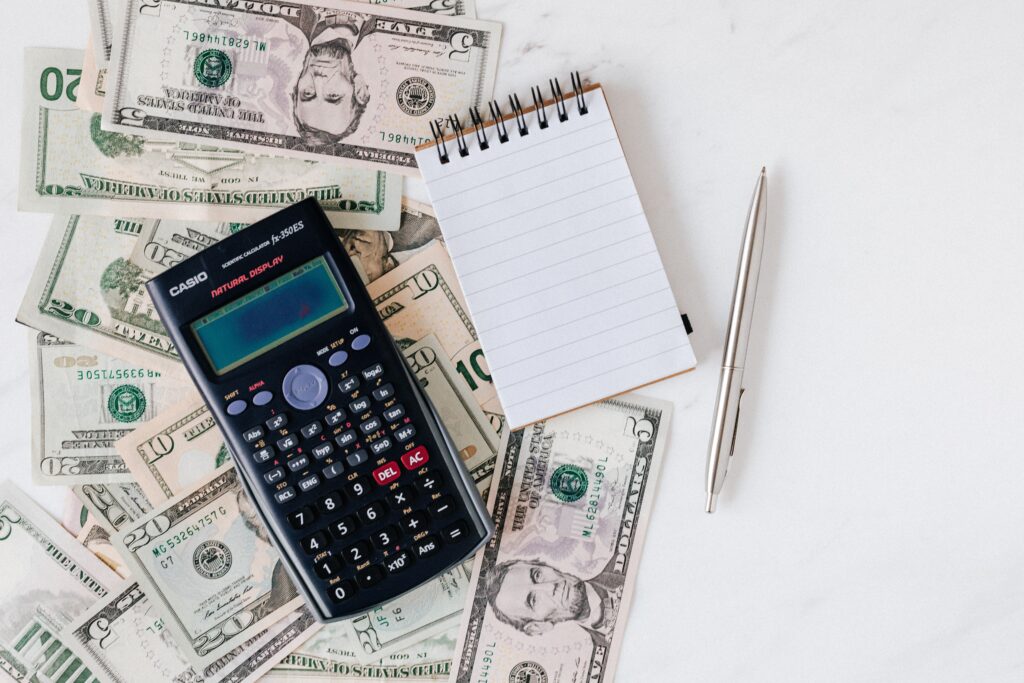
Once flights, insurance, and accommodation are paid, calculate how much remains for each day.
Suppose you have $800 left for an eight-day trip.
Your average daily budget is $100.
That $100 needs to cover:
- Meals
- Local transport
- Attractions
- Snacks
- Small purchases
- Unplanned costs
You may spend $65 one day and $140 the next. That is fine. The average matters more than the exact daily amount.
Track spending from the first day.
Waiting until the end of the trip to check your account balance is not budgeting. It is discovering the damage.
Separate Fixed and Flexible Costs
Fixed costs are expenses you usually pay before the trip:
- Flights
- Visa fees
- Insurance
- Hotels
- Prepaid tours
Flexible costs change based on your daily decisions:
- Food
- Taxis
- Shopping
- Drinks
- Attractions
- Souvenirs
Try to control the fixed costs early. Then set limits for flexible spending.
This approach gives you more control than trying to save money randomly after arrival.
Step-by-Step Blueprint for Saving Money on International Travel
Use this process before booking the trip.
Step 1: Choose a Destination Based on Total Value
Do not choose a destination only because the flight looks cheap.
Research the average cost of:
- Accommodation
- Meals
- Public transport
- Attraction tickets
- Visa
- Travel insurance
- Airport transfer
- Taxes
- Mobile data
Imagine you are comparing two destinations for seven nights.
Destination A
- Flight: $450
- Hotel: $140 per night
- Food and transport: $65 per day
- Visa and insurance: $150
Estimated total:
- Flight: $450
- Hotel: $980
- Food and transport: $455
- Visa and insurance: $150
- Total: $2,035
Destination B
- Flight: $650
- Hotel: $65 per night
- Food and transport: $35 per day
- Visa and insurance: $100
Estimated total:
- Flight: $650
- Hotel: $455
- Food and transport: $245
- Visa and insurance: $100
- Total: $1,450
Destination B has the more expensive flight but saves $585 overall.
This is why budget travel begins with total destination cost, not airfare.
Step 2: Travel During the Shoulder Season

Peak-season travel can increase nearly every part of the budget.
Flights cost more. Hotels sell out. Attractions become crowded. Tours have less availability. Even local transport can become more expensive in heavily visited areas.
The shoulder season sits between the busiest and quietest periods.
You may get:
- Lower airfares
- Better hotel rates
- Smaller crowds
- More room availability
- Pleasant weather
- Easier restaurant bookings
Travelling a few weeks before or after the peak can reduce the total cost significantly.
Avoid automatically choosing school holidays, major festivals, long weekends, and famous event dates.
Check the local calendar before booking.
A city may look unusually expensive because of a convention, sporting event, concert, or national holiday.
Move the trip by two or three days and compare again.
Step 3: Search Flights With Flexible Dates and Airports
Fixed dates reduce your options.
Search across a range of departure and return dates. Compare different trip lengths. A ten-night trip may have a cheaper flight than an eight-night trip.
Check:
- Midweek departures
- Saturday departures
- Early-morning flights
- Overnight flights
- Nearby airports
- Alternative arrival cities
Do not choose a distant airport without calculating the transfer.
A flight that saves $90 is not cheaper when you need:
- $45 bus ticket
- $30 taxi
- $20 meal
- Three extra hours of travel
Compare the real cost from your home to your hotel.
Set fare alerts when the trip is still several months away. This reduces the pressure to guess whether the current price is good.
When you find a reasonable fare within your budget, book it.
Waiting endlessly for the absolute lowest price can backfire.
Step 4: Travel With Less Luggage

Baggage fees can add $60 to $200 or more to an international trip.
Budget airlines may charge separately for:
- Cabin bag
- Checked bag
- Overweight bag
- Oversized bag
- Airport baggage payment
The cheapest way to avoid these charges is to pack less.
Use a simple packing system:
- Choose clothes that work together
- Pack lightweight layers
- Limit shoes
- Use travel-size toiletries
- Plan to do laundry
- Wear heavy items during transit
- Leave space for small purchases
Check the airline’s exact weight and size limits.
Do not assume every airline uses the same cabin baggage rules. A bag accepted by one carrier may be too large or heavy for another.
Pay for luggage online when needed. Airport charges are often higher.
Also check baggage rules on connecting flights. A journey involving two airlines may apply different limits.
Step 5: Choose Accommodation by Location and Total Cost
A cheap hotel far from everything can create an expensive trip.
Before booking, check:
- Distance from public transport
- Travel time to the city centre
- Airport access
- Nearby supermarkets
- Nearby restaurants
- Safety after dark
- Walking distance to attractions
A central hotel may cost $15 more per night but save $20 per day in transportation.
Look at the complete price, including:
- Taxes
- Resort fees
- Cleaning fees
- Service charges
- Parking
- Breakfast
- Security deposit
- Extra-person fees
Compare different accommodation types.
Hostels
Hostels can be useful for solo travelers and short stays.
A dorm bed may cost $20 to $50 per night, depending on the city. Private hostel rooms can provide more privacy while remaining cheaper than standard hotels.
Check whether lockers, towels, breakfast, and luggage storage are included.
Guesthouses
Guesthouses often offer better value than large hotels.
They may include breakfast, local advice, and a more residential location. Read recent reviews about cleanliness, noise, and transport access.
Apartments
Apartments work well for families, groups, and longer stays.
A kitchen can reduce food costs. However, cleaning fees may make short stays expensive.
Hotels
Budget hotels provide predictable service and privacy.
Look for properties near a train or bus station. Free breakfast, laundry facilities, or an airport shuttle may justify a slightly higher room rate.
Step 6: Reduce Food Costs Without Missing Local Cuisine
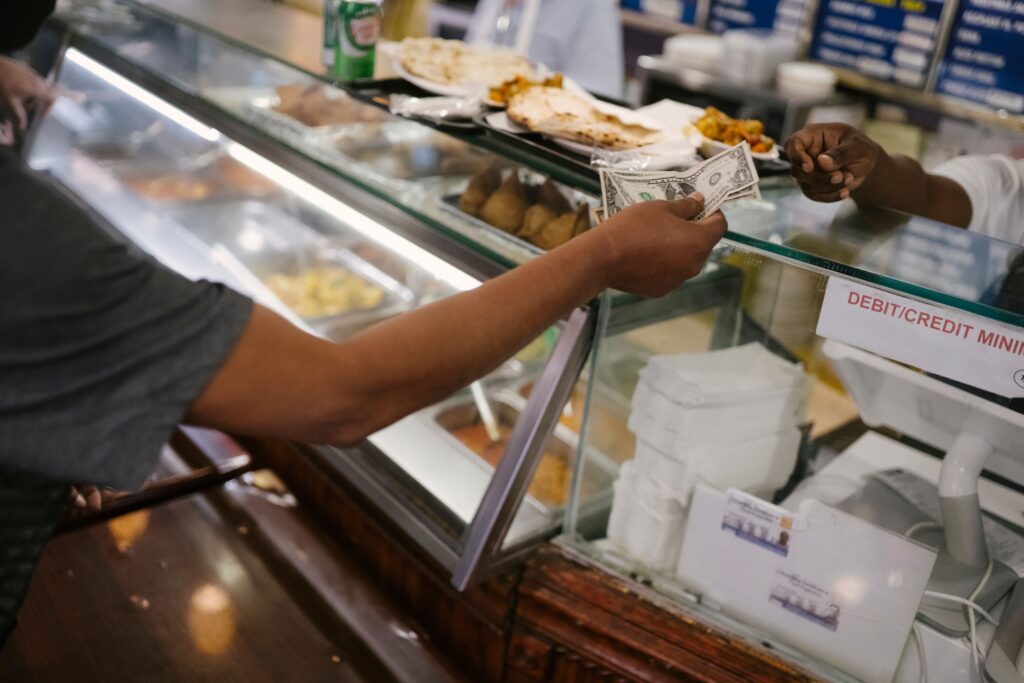
Food is part of the travel experience.
Saving money does not mean eating badly.
Use a balanced approach:
- Eat a simple breakfast
- Choose a local lunch
- Enjoy a flexible dinner
- Plan one or two special meals
Lunch specials are often cheaper than dinner menus.
Visit popular restaurants earlier in the day when prices may be lower and reservations easier.
Walk away from major tourist attractions before choosing a restaurant. A few streets can make a noticeable difference in price.
Use supermarkets for:
- Water
- Fruit
- Yoghurt
- Bread
- Snacks
- Breakfast items
- Simple meals
A $15 supermarket purchase can replace several expensive café visits.
Avoid relying on hotel minibars and airport food. These are usually convenience purchases with high prices.
Carry snacks on long travel days.
When tap water is safe, use a refillable bottle. Buying several bottles every day can add $30 to $60 over a longer trip.
Step 7: Use Public Transport From the Airport
The first ride of the trip is often one of the most overpriced.
Compare:
- Airport train
- Public bus
- Metro
- Shared shuttle
- Hotel shuttle
- Taxi
- Ride-hailing service
Suppose the options are:
- Taxi: $65
- Shared shuttle: $28
- Airport train: $14
- Public bus: $6
Using the bus or train can save more than $50 immediately.
Research the route before landing.
Save the station name, operating hours, ticket price, and walking directions to your accommodation.
Public transport may not be the best option when:
- You arrive very late
- You have heavy luggage
- The area is unsafe after dark
- You are travelling with small children
- Several people can share a taxi
- The route requires multiple difficult transfers
Saving money is useful. Safety and practicality come first.
Step 8: Avoid Foreign Transaction and Currency Conversion Fees
Banking fees are one of the easiest international travel costs to reduce.
Common charges include:
- Foreign transaction fee
- ATM withdrawal fee
- Local ATM operator fee
- Currency conversion markup
- Dynamic currency conversion
- Cash exchange commission
A card charging a 3% foreign transaction fee adds $60 to $2,000 of spending.
Use a suitable card with no foreign transaction fee when available.
When a payment terminal asks whether you want to pay in USD or local currency, local currency is often the better option.
The USD option may use dynamic currency conversion, where the merchant or payment processor chooses the exchange rate. That rate can be poor.
Always review the amount before approving the payment.
At ATMs, decline the machine’s conversion offer when your own bank provides a better rate.
Withdraw cash less frequently to reduce repeated ATM fees, but do not carry more than you can safely manage.
Avoid exchanging large amounts of money at airports. Airport counters often provide weaker rates.
Step 9: Save on Mobile Data
International roaming can become expensive without warning.
Before travelling, compare:
- Your mobile provider’s roaming pass
- Local physical SIM
- eSIM
- Portable Wi-Fi
- Hotel and public Wi-Fi
An international roaming plan may cost $10 per day. Over ten days, that is $100.
A local SIM or eSIM might cost $15 to $40 for the entire trip.
Download useful content before leaving:
- Offline maps
- Translation language files
- Flight confirmations
- Hotel details
- Train tickets
- Insurance documents
- Entertainment
Turn off automatic app updates and cloud photo uploads when using limited mobile data.
Do not depend entirely on public Wi-Fi for important bookings or payments.
Step 10: Buy Attractions Selectively
Trying to visit every famous attraction is expensive and exhausting.
Choose a small number of paid experiences that matter most.
Build the rest of the trip around:
- Free museums
- Public parks
- Markets
- Beaches
- Walking routes
- Viewpoints
- Historic neighbourhoods
- Free cultural events
Check for:
- Free-entry days
- Discounted evening hours
- Student rates
- Senior rates
- Family tickets
- Online booking discounts
- Combination tickets
City passes can be useful, but only when you plan to visit enough included attractions.
Suppose a city pass costs $110.
Your planned attractions cost:
- Museum: $25
- Observation deck: $35
- River cruise: $30
- Historic site: $20
- Total: $110
The pass only breaks even.
If it also includes transport you would use, it may be worthwhile. If your schedule is uncertain, individual tickets may be better.
Expert Ways to Save More on International Travel
These strategies require more planning but can reduce the total cost.
1. Use a Stopover as an Extra Destination
Some international routes allow a long stopover in another city.
Instead of treating it as wasted time, turn it into a short visit.
For example, you might spend two nights in the connecting city before continuing to your main destination.
This can provide two destinations for a similar airfare.
Check:
- Visa requirements
- Baggage handling
- Airport transport
- Hotel cost
- Connection rules
- Ticket conditions
A stopover saves money only when the extra accommodation and transport remain reasonable.
2. Travel Slowly
Changing cities frequently costs money.
Every move may involve:
- Train or flight
- Station transport
- Baggage fees
- Food during transit
- Luggage storage
- Early check-in
- Lost sightseeing time
Staying longer in fewer places can lower the average daily cost.
Weekly accommodation discounts may apply. You can shop at supermarkets, learn the transport system, and avoid rushed decisions.
Slow travel often feels better too.
3. Book Refundable Accommodation Early
Reserve a refundable hotel when you find a reasonable rate.
Continue checking prices before the cancellation deadline.
If a better room or lower rate appears, cancel and rebook.
This gives you protection against rising prices while keeping flexibility.
Record the cancellation date.
Do not create several reservations and forget about them.
4. Combine Expensive and Affordable Destinations
You do not need to spend the entire trip in the most expensive city.
Stay there for two or three nights, then move to a cheaper nearby destination.
For example:
- Expensive city hotel: $190 per night
- Nearby city hotel: $75 per night
Splitting a seven-night trip into three expensive nights and four affordable nights could save $460 compared with staying in the expensive city the entire time.
5. Search for Repositioning Options
A long-haul flight may be cheaper from another nearby airport.
You could book a separate flight, train, or bus to reach that airport.
Suppose:
- Direct long-haul fare: $1,100
- Fare from another city: $720
- Positioning transport: $120
- Hotel: $90
- Total: $930
Potential saving: $170
Leave a large time buffer when using separate bookings. If the first journey is delayed, the second airline may not protect you.
6. Use Overnight Trains and Buses Carefully
Overnight transport can replace one hotel night.
For example:
- Daytime train: $45
- Hotel: $70
- Combined cost: $115
- Overnight sleeper: $75
Potential saving: $40
But poor sleep can reduce the value of the next day.
Choose this strategy when the journey is reasonably comfortable and the schedule makes sense.
Common International Travel Money Mistakes
Booking Before Checking Visa Rules
A cheap flight is useless when the visa is expensive, difficult to obtain, or unavailable in time.
Check:
- Visa fee
- Processing time
- Appointment requirements
- Passport validity
- Proof of funds
- Transit visa
- Required insurance
Do this before booking non-refundable travel.
Ignoring Transit Visa Requirements
A connection may require a transit visa even when you do not plan to leave the airport.
Rules depend on nationality, destination, airport, terminal transfer, and connection length.
Check every transit country.
Paying for Everything in USD Abroad
Paying in USD may feel easier, but the conversion rate can be worse.
Use local currency when appropriate and compare the final amount.
Using Airport Taxis Without Research
Official airport taxis can be useful, but they are often much more expensive than trains or buses.
Research options before arrival.
Packing Too Much
Excess luggage creates baggage fees, taxi dependence, and storage problems.
Pack for the trip you are taking, not every possible emergency.
Choosing the Cheapest Hotel Without Checking Location
A remote hotel can increase daily transport costs and waste time.
Compare the total stay cost.
Buying Every Activity in Advance
Pre-booking protects availability, but it also reduces flexibility.
Book only high-demand attractions and essential tours early. Leave space for weather changes and local discoveries.
Carrying Too Much Cash
Large amounts of cash create theft risk and make spending difficult to track.
Carry a reasonable amount and use secure payment methods where accepted.
Skipping Travel Insurance to Save Money
Insurance can feel like an unnecessary expense until something goes wrong.
A medical emergency, cancellation, or evacuation can cost far more than the premium.
Choose coverage based on the trip risks and read the exclusions.
Forgetting Small Daily Expenses
Coffee, bottled water, snacks, taxis, tips, and convenience purchases can add $20 to $50 per day.
Over two weeks, that becomes $280 to $700.
Track spending daily.
Real-Life International Travel Example
Imagine you are planning a ten-day international trip with a budget of $2,400.
Your first option includes:
- Flight: $650
- Hotel: $130 per night
- Airport taxis: $120
- Checked baggage: $140
- Food: $50 per day
- Activities: $300
- Insurance and mobile data: $140
The estimated total is $3,150.
You make several changes.
You travel three weeks earlier and find a flight for $520. You book a guesthouse near public transport for $75 per night. You use an airport train for $15 each way, travel with a cabin bag, buy an eSIM for $20, and plan a mix of supermarkets, local lunches, and two special dinners.
Your new estimate becomes:
- Flight: $520
- Accommodation: $750
- Airport transport: $30
- Baggage: $0
- Food: $330
- Local transport: $100
- Activities: $220
- Insurance and mobile data: $110
- Emergency buffer: $150
- Total: $2,210
You save $940 without removing the main experiences from the trip.
The biggest savings come from the travel period, hotel location, luggage choice, and daily planning.
Not from skipping every coffee.
The Bottom Line
Saving money on international travel starts before the trip begins.
Compare destinations by total cost, travel outside peak periods, use flexible flight searches, pack lighter, and choose accommodation near public transport. Avoid foreign transaction fees, pay in local currency when appropriate, control mobile data costs, and choose paid attractions carefully.
Spend less on convenience fees and weak-value purchases.
Keep money available for the experiences you will actually remember.
A well-planned international trip does not need to feel cheap. It simply needs every major expense to earn its place in your budget.